Bromley Information, Advice and Support Service (IASS)
Information, advice and support about special educational needs and disabilities (SEND) for children and young people up to age 25, and their parents and carers.
Topics: information and advice
Schools and settings
Choosing the right school
Advice to help you choose an education setting for your child if they require additional or specific support to meet their diagnosed or undiagnosed SEND.
Learn more →
Communicating with school
Tips to help you think about communicating with the school staff and what you can do if you are unhappy about how they are communicating with you.
Learn more →
What schools should do
All schools have a legal duty to support children who have SEND and every child has a right to an inclusive education with their typically developing peers.
Learn more →
The Council’s SEN transport policies set out in detail who is eligible for transport support in mainstream and specialist settings from primary to post-16.
Learn more →
Refusing to go to school
School refusal can be really stressful. It is important to seek help as soon as possible when a child has been refusing to attend school.
Learn more →
Excluded from school
Learn more →
SEN support and EHC plans
Graduated Approach
The Graduated Approach is a step-by-step way of making sure children with emerging needs as well as SEND get the right support at the right time.
Learn more →
Ordinarily Available Provision (OAP)
OAP describes what pupils can typically expect to access in mainstream schools to support their SEND.
Learn more →
SEN support
If a child needs more help than what’s ordinarily available, the school will move to SEN Support using the Assess – Plan – Do – Review cycle.
Learn more →
EHC needs assessments
An education, health and care (EHC) needs assessment is an assessment of the education, health and social care needs of a child.
Learn more →
Learn more →
EHC annual reviews
Learn more →
Mediation and appeals
If the Council have made a decision you don’t agree with, you may have the right to mediation or to appeal.
Learn more →
Mediation is a less formal way of trying to settle the dispute to help you reach agreement on the points of dispute.
Learn more →
Tribunals and appeals
Learn more →
Health and care support
Health and care
Learn more →
Mental health & wellbeing
Having good mental health helps us relax and enjoy our lives more.
Learn more →
Moving to adult services
Some disabled children will transition to adult services when they turn 18.
Learn more →
Choose by age

Early years (under 5’s)
Learn more →

School aged (5 to 16)
Learn more →

Young adults (16 and over)
Learn more →
About us
Learn more about us and what we do:
Help and resources
The law
Understanding the law will help you in your journey through SEND system.
Learn more →
Videos
Information, advice and support provided in video format.
Learn more →
Useful links
Learn more →
Downloads
Learn more →
Bromley Parenting Hub
The Bromley Parenting Hub pulls together information for all parents in the borough, whether together, separated or considering separation, who want to find ways to improve their relationship and get on better.
Learn more →

The use of AI
The IASS Network have produced this short statement for use by services in their work with parent/carers, children and young people which advises on the risks associated with using artificial intelligence tools in relation to the law and accessing legal guidance.
Learn more →
News and events
We are recruiting volunteers!
Do you, or someone you know, want to support Bromley families with SEND? If so, get in touch as we are recruiting volunteers.
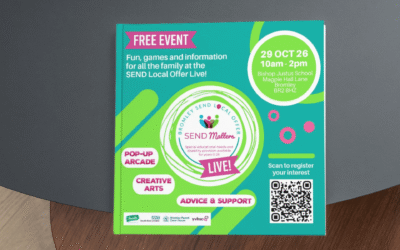
Come along to the Bromley SEND Local Offer Live!
Join us this October half term for SEND Local Offer Live! at Bishop Justus Church of England School

SEND Reforms Plan Submitted: A Major Step Forward for Bromley’s Inclusive SEND System
Bromley reached an important milestone in the national SEND reforms, with the successful development and submission of its Local SEND Reform Plan to the Department for Education (DfE).